Health Impact Coalition (HICO)
Fragmentation and siloed approaches remain all too common in international cooperation. The Health Impact Coalition (HICO) is determined to change that. Eight Belgian NGOs working in global health are joining forces through an innovative model of collaboration. Their aim is to achieve more lasting, system-level health impact through strategic cooperation, shared structures and a collective voice.
What began as informal discussions among directors quickly developed into an initiative with solid foundations. With S&L’s support, the coalition defined a strategic framework, established a shared governance model and operational working structures, and developed an initial implementation plan. The organisations aim to submit a joint programme for the 2027–2031 funding cycle. It is an ambitious undertaking—and a necessary step in a sector that needs stronger collaboration and demonstrable results.
From fragmentation to synergy
HICO’s strength lies in the shared principles underpinning it. All participating organisations—including Memisa, Artsen Zonder Vakantie and other established NGOs—believe that health systems can only be strengthened sustainably through systems thinking. Rather than running separate programmes in the same regions, the partners want to work together across the entire continuum of care: from community health posts to hospitals, and from capacity strengthening to policy advocacy.
Elies Van Belle of Memisa explains: “Our strengths complement one another. Some of us work with hospitals, while others focus on primary care, training or policy advocacy. Together, we can connect those different parts into a coherent whole. That makes our collective work both more efficient and more relevant.”
This complementarity is also reflected in practice. The collaboration has led to a partnership around paediatric care in several countries, with Memisa, Artsen Zonder Vakantie and Chain of Hope Belgium aligning their respective areas of expertise.
For Stefaan Bonte of Artsen Zonder Vakantie (AZV), this illustrates exactly what HICO is seeking to achieve: “We do not start with a structure. We start with the needs on the ground and the recognition that collaboration is what makes the difference.”
“We connect the different parts of the health system. That systemic approach makes collaboration essential.
”
A solid foundation for a shared strategy
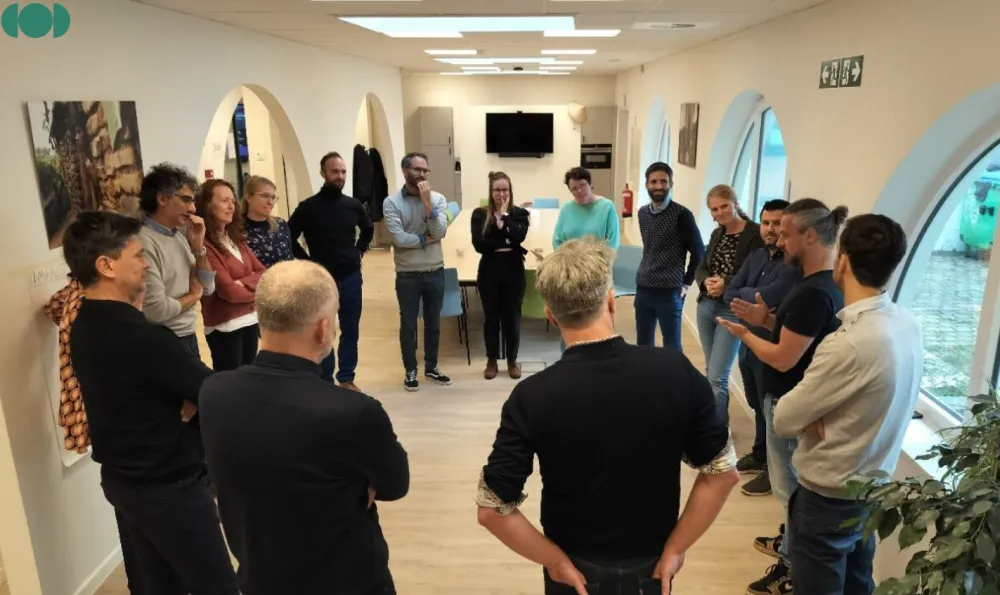
The partnership took shape through a steering group of directors, three active working groups and the appointment of a coordinator. At the same time, the partners drew up a Memorandum of Understanding setting out agreements on governance, shared responsibilities and financial arrangements for the start-up phase. This structure allows the coalition to remain flexible without compromising clarity.
HICO is now working across three areas: a joint application to Belgium’s Directorate-General for Development Cooperation (DGD) for the 2027–2031 programme cycle; the development of shared back-office services; and a clear communication strategy aimed at both the wider public and institutional stakeholders such as DGD, Enabel, the Institute of Tropical Medicine Antwerp and European partners. The coalition is also mapping which organisations work where and what expertise they bring. This analysis is essential to organising collaboration strategically by country and theme.
The strategic role of S&L
To combine pace with broad internal ownership, HICO brought in S&L as an external partner. Koenraad Depauw and Jeroen Van Hove supported the entire process—from shaping the coalition’s vision and establishing working structures to facilitating collective decision-making. Their methodological rigour and experience of working with coalitions helped the group build trust and deliver results in a remarkably short period.
Elies Van Belle looks back positively on the collaboration: “S&L’s support helped us make well-founded decisions with broad backing in a short space of time. Without them, we would still be exchanging statements of intent. Instead, we now have a clear framework and a workable roadmap.”
Stefaan Bonte also highlights the value of an external perspective: “S&L brought direction to a complex process. They respected the identity of each organisation, while challenging us to think collectively beyond what any of us would have achieved alone.”
S&L’s approach was pragmatic and phased. First, S&L worked with the steering group to define a strategic framework and shared ambition. This was then translated into working structures, agreements and preparations for recruiting a coordinator. Throughout the process, the support focused on strengthening ownership within the coalition without compromising pace or rigour.
“Without S&L’s external support, we could not have achieved both this pace and this level of quality.”
Looking ahead: turning shared strength into action
With its foundations firmly in place, HICO is now focusing on implementation. Options for shared services—including legal support, IT, integrity and travel management—continue to be developed, while local consultations are helping to shape the joint programme proposals. The coalition was publicly launched in December 2025, giving the collaboration a clear external profile.
HICO’s ambition nevertheless extends well beyond the DGD programme cycle. It is designed as an open model: member organisations retain their autonomy while participating in a shared endeavour that allows for nuance, flexibility and future expansion. As Stefaan puts it: “We are not building a closed ecosystem, but a practical model in which collaboration is natural, agile and scalable.”
Does this case appeal to you?
We would be happy to discuss your organisation’s specific needs. Two of our consultants will meet with you to explore your request and develop an initial proposal. Based on your feedback and further co-creation, we will then prepare a final proposal.