A merger built on wonder
A merger of three arts organisations, a shared dream and the leap to long-term funding: BRODER grew out of collaboration, trust and a belief in the power of wonder. We spoke to Joos Callens, a board member, and Koen Boesman, its artistic director, about how it began, what they learnt and why knowing your foundations matters.
Working together before becoming one
To begin with, who or what is BRODER?
Joos: BRODER grew out of three organisations: TG Vagevuur, which has existed for nearly 20 years; Aardvork, a children’s music theatre company; and Brussels Experimental, the organisation led by composer Peter Spaepen, who also ran a choir and contributed to many different productions. All those people and creative practices have now come together within BRODER.
How do you submit a joint funding application while preparing a merger? And what happens if you ultimately fail to secure structural funding?
Koen: We prepared the merger without knowing whether it would ultimately go ahead. We already knew each other well, so it felt like a natural step. But we followed S&L’s advice: begin by defining who you are and what your culture is. What does each organisation bring? What happens if the funding does not come through? In that case, each organisation would continue as before. Being explicit about that was crucial.
“The exercises with S&L clarified what makes BRODER truly BRODER. Putting that into words immediately generated enormous enthusiasm.”
A shared dream
How did you approach that?
Koen: We carried out a vision exercise with S&L to define the shared foundations of the three organisations. We allowed ourselves to imagine the most wonderful version of the ideal organisation. That quickly led us to a shared artistic purpose. It simply clicked. All three organisations had a similar, hands-on culture: everyone helps to load the van, creators and performers alike. Our answers to the question “Why do you make what you make?” were remarkably close.
Joos: From an organisational and financial perspective, I found it more daunting. We had different audiences and different ways of working. Was it sensible to leave behind the project-based model—and its project funding? We also had to move beyond that familiar project logic and develop a more permanent way of working. In a classic merger, people say that one plus one equals three. Here, one plus one plus one seemed to equal 23.
It was exciting and full of unknowns. What made you take the leap?
Koen: To me, it felt like a natural step. We were already moving in the same direction. Our artistic and production practices followed the same logic. Bringing the three organisations together revealed their foundations and showed how they could reinforce one another. Together, they formed a coherent artistic story. The exercises with S&L clarified what makes BRODER truly BRODER. Putting that into words immediately generated enormous enthusiasm.
From idea to policy
What makes Broder so typically BRODER?
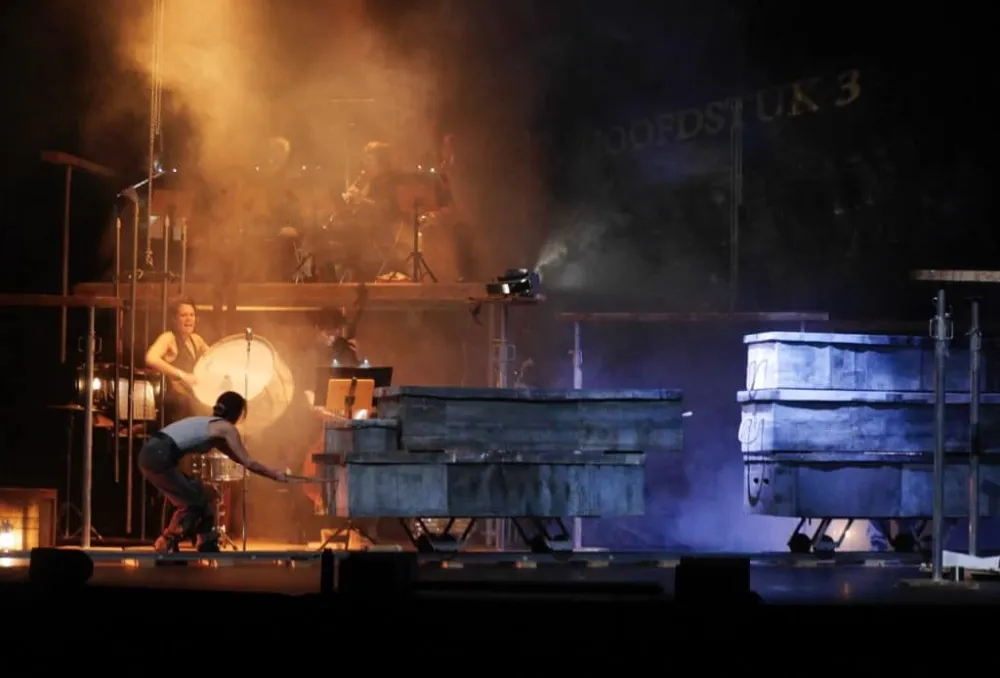
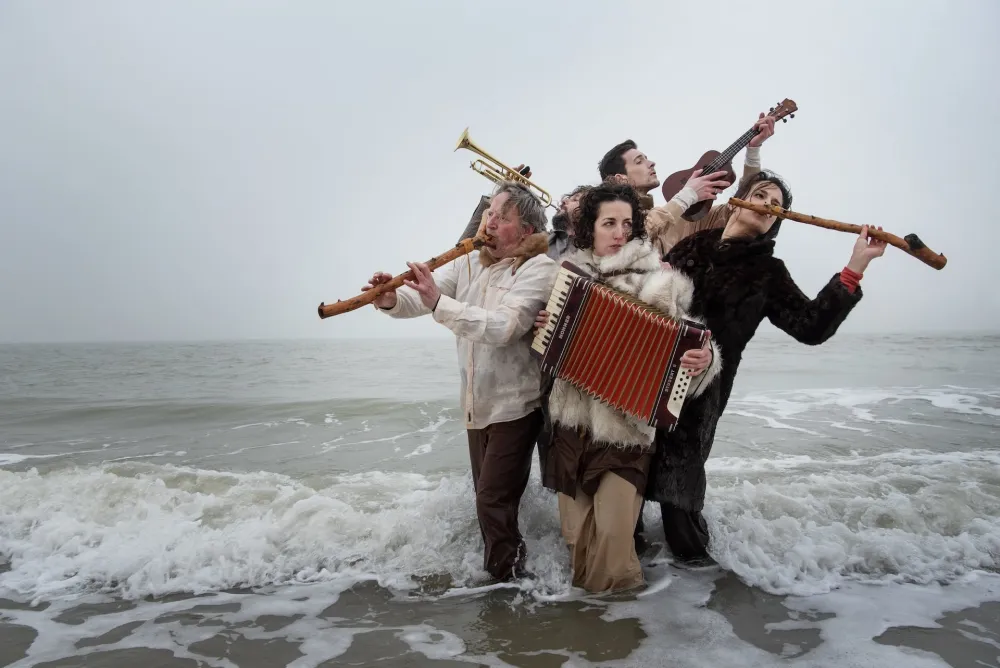
Koen: A BRODER performance feels a bit like reading a Roald Dahl book for the first time. You discover that the limits of fantasy are much further than you thought. That pleasure, that space and wonder is the goal. We like to look for bizarre stories, dive into them and then build a wonderful world around our research. At BRODER we all share the fascination for the bizarre and the belief that the world is full of it. We have no kings or princesses, but colorful forgotten peripheral figures.
From idea to strategy
What makes BRODER so distinctly BRODER?
Koen: A BRODER production feels a little like reading a Roald Dahl book for the first time: you discover that the boundaries of your imagination extend much further than you thought. That sense of delight, freedom and wonder is what we aim for. We seek out strange stories, immerse ourselves in them and build a wondrous world around our research. Everyone at BRODER shares a fascination with the unusual and a belief that the world is full of it. Our stories are not about kings and princesses, but about colourful, forgotten figures from the margins.
As creators, you have considerable experience of project funding. What changes when you apply for long-term structural funding?
Koen: You have to articulate the essence of what you do, and your choices must reflect it. Thanks to the process with S&L, we now have clear core values against which we assess everything. Defining them required considerable work, but it paid off: we now have a strong foundation. We no longer have to reinvent everything for each new project. We can move forward and adjust course where necessary. It is fascinating to assess every project through this lens and recognise our shared logic within it.
Joos: The challenge is to forge one whole from the foundations of all our projects—and to preserve that unity over time.
Good news—and new responsibilities
How has that challenge changed now that you have secured structural funding?
Joos: It is exciting, particularly as a board member. Suddenly, you are a fully fledged organisation with employees, a lease and all the responsibilities that come with them. S&L proved especially helpful on the organisational side, supporting us in turning our strategic plan into practice.
Koen: S&L also helped us enormously on the artistic side and with articulating our vision clearly throughout the funding application. It is important to understand what your artistic core values mean for the rest of your work. People—performers, creators, musicians and technicians—are central to BRODER, so that must also be visible in our budget. We choose to invest in people and in the care they deserve.
Joos: Preserving that principle and carrying it through into organisational and financial decisions is fascinating. Do you find it difficult to balance your role as a leader with your role as a creator—the artistic and the organisational?
Koen: Absolutely. We came from a project-based way of working, but we now have five people on the payroll. Suddenly, you are both an employer and a creator. Those two roles constantly compete for the same hours in the day. We are now trying to organise our time in clearly defined blocks.
External help as leverage
When do you realise that something is beyond your expertise?
Koen: As a creator, you do not control the wider cultural landscape. What can you expect from the political debate over the coming years? What are the long-term priorities of cultural centres? Do you respond to those developments, or stubbornly continue along your own path? Understanding the whole system and deciding how to position yourself within it is no small task. We are also a small organisation and sometimes wear three or four hats at once: technician, director, HR manager and strategist. That works up to a point, but there are limits.
Would you bring in external strategic expertise again?
Koen: Absolutely. Sometimes it is better to draw on external expertise than to try to work everything out, create everything and fund everything yourself. Working with an expert costs money, but it also saves time and a great deal of searching. The way Juliska from S&L understood us from an outsider’s perspective made the investment entirely worthwhile. Sometimes you become lost in your own words, and she guided us towards exceptionally clear conclusions.
Joos: The fact that S&L accepted us as a client felt like a vote of confidence in itself. They would not have taken on the assignment if they had not believed in it. Even though I sometimes worried that we were being too bold—two Tintins with too much swagger and only a slim chance of success—they had confidence in us. That confidence was infectious.
Koen: My main concern was that it would all be superficial work with Post-it notes.
And were there Post-it notes?
Koen: Yes. (laughs) But they genuinely helped us enormously.
“The way Juliska from S&L understood us from an outsider’s perspective made the investment entirely worthwhile.”
NB. Joos Callens took part in the merger as a client in his capacity as a board member of TG Vagevuur. He has since joined S&L as a consultant, providing strategic and organisational advice to organisations working in the arts, culture, the youth sector and wider civil society.
A merger built on wonder had support of these team members
Does this case appeal to you?
We would be happy to discuss your organisation’s specific needs. Two of our consultants will meet with you to explore your request and develop an initial proposal. Based on your feedback and further co-creation, we will then prepare a final proposal.