Many policy plans remain just that. A file written with one purpose and deadline, after which it ended up in a drawer. Only to be dusted off for reporting. This is not out of bad faith or because organizations make false promises in such a plan. It is mainly because such a plan becomes outdated very quickly and becomes unusable. Why does a five-year policy plan already feel half outdated after one year? It is a question I hear in many organizations, but questioning the concept? Rarely. Because making plans is embedded in our organizational culture, and the subsidy landscape also requires it of us.
But change is also embedded. A new minister with different priorities. A round of budget cuts. A partner that merges. Wage costs that rise much more sharply than expected. A coordinator who leaves. Initiatives that fail to get off the ground. By the time you carry out an interim evaluation, there is a document on the table that describes a world that no longer exists.
The reflex is then: plan again, plan better. Sharper indicators, an extra scenario, an interim adjustment. But an outdated plan is best not replaced by a new almost-outdated plan. I think there is a better way to navigate toward the future than with a detailed multi-year plan.

Cause and effect are disconnected
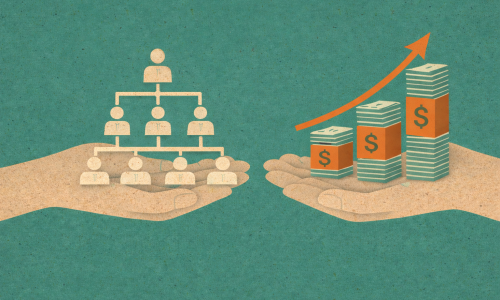
Every policy plan rests on one silent assumption: that there is a clear line from what you do to what you achieve, and from what you achieve to your end goals, your ultimate objectives. This action leads to that result; that result contributes to that objective. That is how it appears in the templates. That is how assessors ask for it. That is how we have all learned it. But that is simply not at all how it works in reality.
That line does not run straight. It runs through a network of other players, other agendas, shifting power relations, and events no one was waiting for. What you do today ends up, three links down the chain, in a place you could not have identified in advance. Could not have predicted. And conversely: what moves within your operations is often the result of something you yourself had nothing to do with, something you did not see coming.
A plan, then, is not a prediction. It is a document about what you intend to do. Nothing more, nothing less. And if you do not adjust that plan along the way based on your findings or changing circumstances, things will probably not turn out well.
The reality within and around organizations is moving more and more from complicated to complex. That is not a defect in your organization or a failure of your strategic thinking. What is a problem, however, is pretending it is not there. Because then you build a plan that can only work in a world that no longer exists.
In the next blog: three assumptions underlying the classic policy plan, and why they are cracking on all sides.
Webinar | Navigating complex times: strategy and leadership when the future cannot be planned
06 October 2026
Planning five years ahead while the ground is shifting. Almost every policy plan starts from the assumption that we know the future well enough to translate it into objectives. That assumption no longer holds, and yet it continues to shape our plans. In this webinar, we look at what does work, and what navigating requires from your strategy and your leadership.
Sign up