The temperature in public debate has risen sharply in recent years. What used to be a difference of opinion is now a camp. Organizations that once felt safe in nuance now feel the heat. Every position – or precisely the lack of one – carries weight. A tweet, an action, a policy note: everything is read as a choice.
Ten years ago, as a civil society organization, you could still stay in the background. You worked to connect people, you wrote recommendations, you sat around the table. Today, reality pushes you out into the open. From climate to migration, from poverty to equality: society expects you to have a view on it. And if you say nothing, that also says something about you.
Many organizations are struggling with this new reality. They grew up in a culture of consultation, consensus, and cooperation. They want to hold on to the middle ground, but the result is often paralysis. The fear of losing people or subsidies weighs more heavily than the urge to change something. But those who only try to connect leave the playing field to those who dare to seek out the contrasts. And it is precisely there, in that tension, that the opportunity for real impact lies today.
“Every position – or precisely the absence of one – carries weight. A tweet, an action, a policy paper: everything is read as a choice.”
Politicizing work requires different muscles
Politicizing work in civil society is often equated with influencing policy and publicly taking positions, but it goes deeper than that. It is the art of not avoiding tension, but of organizing it yourself. Of putting words to what chafes, even when that is uncomfortable.
Campaigning requires different qualities than facilitating a consensus-based conversation. It requires strategic sharpness, rhythm, visibility, and the courage to withstand headwinds. These are not the reflexes that civil society often practices. But they are the reflexes that are needed today. And yes, it becomes tense when part of your own base suddenly no longer agrees with you.
Take your position, choose your side, and you immediately feel what is at stake: loss of members, reputational risk, possible consequences for subsidies. That fear is real, but that clarity also generates new energy. People join because they finally understand what you stand for. Because they recognize themselves in it. And donors give when you show courage.
In French there is a word that we lack in Dutch: apartisan. You do not choose a particular political party, but you do choose values and a public position. Being impartial is not the same as being apolitical. In times of a shift to the right and social polarization, apartisan may well be the most radical choice: refusing to let yourself be locked into party logic, but also refusing to remain silent.
Polarizing can also be done maturely
Polarizing does not have to mean that you start shouting. There are ways to make tension productive instead of destructive. Two of them deserve special attention.
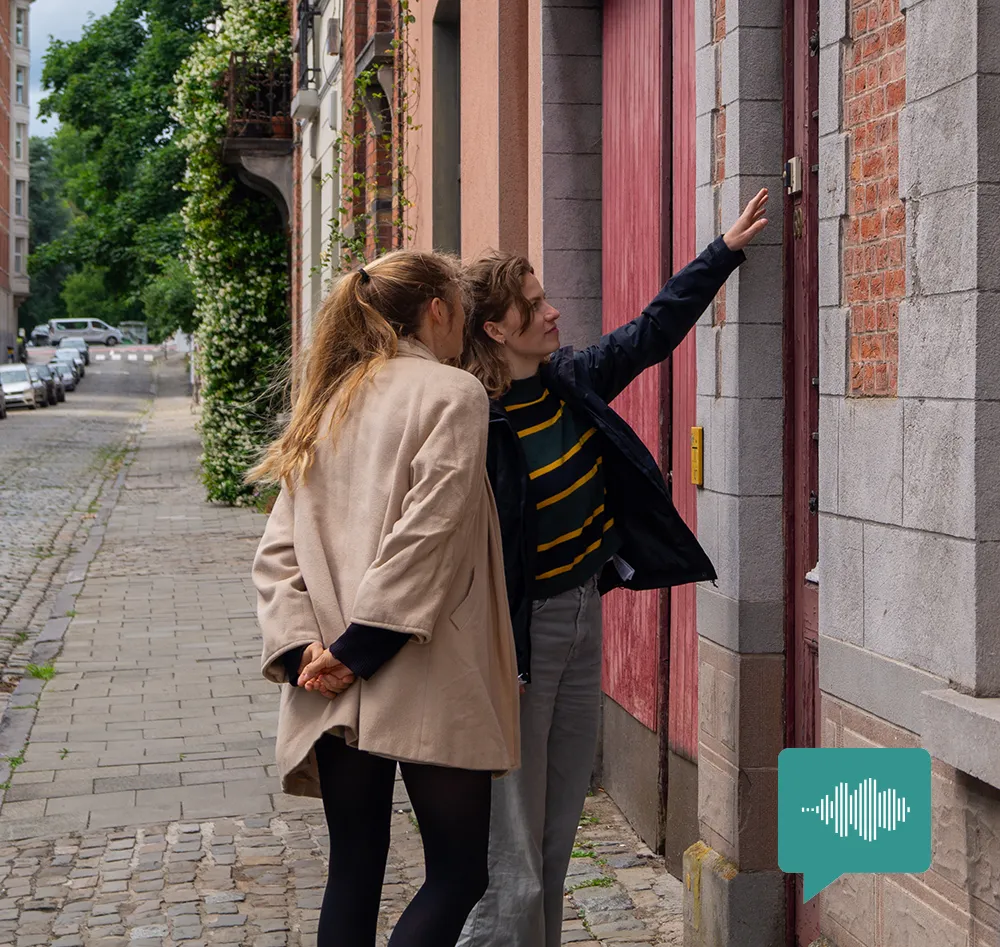
The first is deep canvassing: real conversations, door to door, with people who disagree with you. No anonymous posts, no slogans, but time, the ability to listen, and personal stories. You look for common ground and try to bring someone a little closer to what you believe.
A strong example comes from the organization Klimaatcontact, which wants to hold thousands of climate conversations in neighborhoods where there is a lot of skepticism about climate measures. Their volunteers do not ring the doorbell to hand over pamphlets, but to really talk: about concerns, about daily choices, about what people consider important. Not an anonymous campaign, but a person-to-person encounter. That is exactly why it works.
The second is disruptive activism: actions that disrupt without hardening attitudes. No balaclava, but creativity that breaks through routine. Choosing efficiently where to intervene or speak out. Disruption can be gentle and still unmistakable.
Think of the protest by parents who took their children to sit in the Flemish Parliament every Wednesday to denounce the problems in childcare. No barricades, no slogans, no violence, but a smart, gentle and unsettling gesture that was hard to ignore. Such actions break through routines, attract media attention and expose structural problems without losing the right tone.
Both tactics push the boundaries without losing your dignity. They take a stand, but keep the door open to dialogue.
Money, freedom and timing
Flemish organizations are often heavily dependent on government subsidies. That has helped civil society grow, but it also makes us vulnerable. Anyone who gets eighty percent of their income from a single source risks self-censorship and procrastination. That is why it is crucial to diversify, while we still can.
Individual donors are not only a financial safety net. They also build community, ownership and freedom. Ask for money from the people who are already involved. Volunteers are often your first donors when things get tense. Do not wait until the cuts hit. By then, everyone will be knocking on the same door at the same time.
Choose a clear position
We often talk about connecting in the middle. But perhaps we should not protect the middle, but stretch it. Persuasive organizing means making tensions visible instead of avoiding them. It means inviting people to take a position, not to withdraw.
It is scary. And yet it has to be done. Choose values over noise. Choose nonpartisan over apolitical. Stretch the middle and build financial freedom at the same time. Those who dare to be clear today will gain room to maneuver tomorrow.
On November 19, I am giving a webinar on politicizing work for civil society organizations. We will get down to practical work with deep canvassing and disruptive activism, apply them to your context and work on a plan that your team can actually implement.
Register via our website and bring a colleague.










