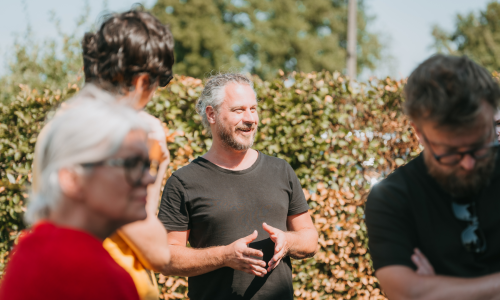
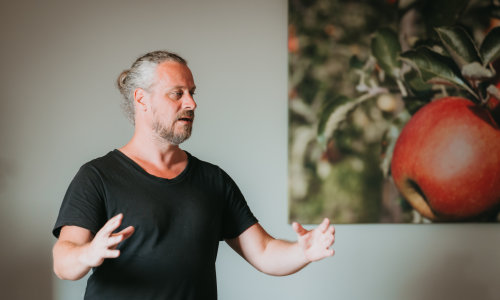
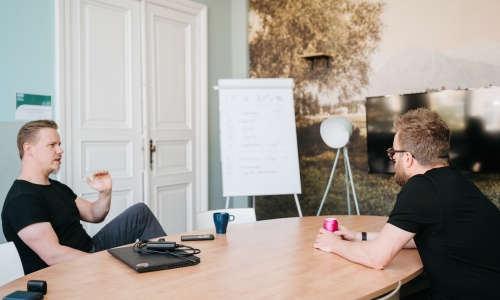
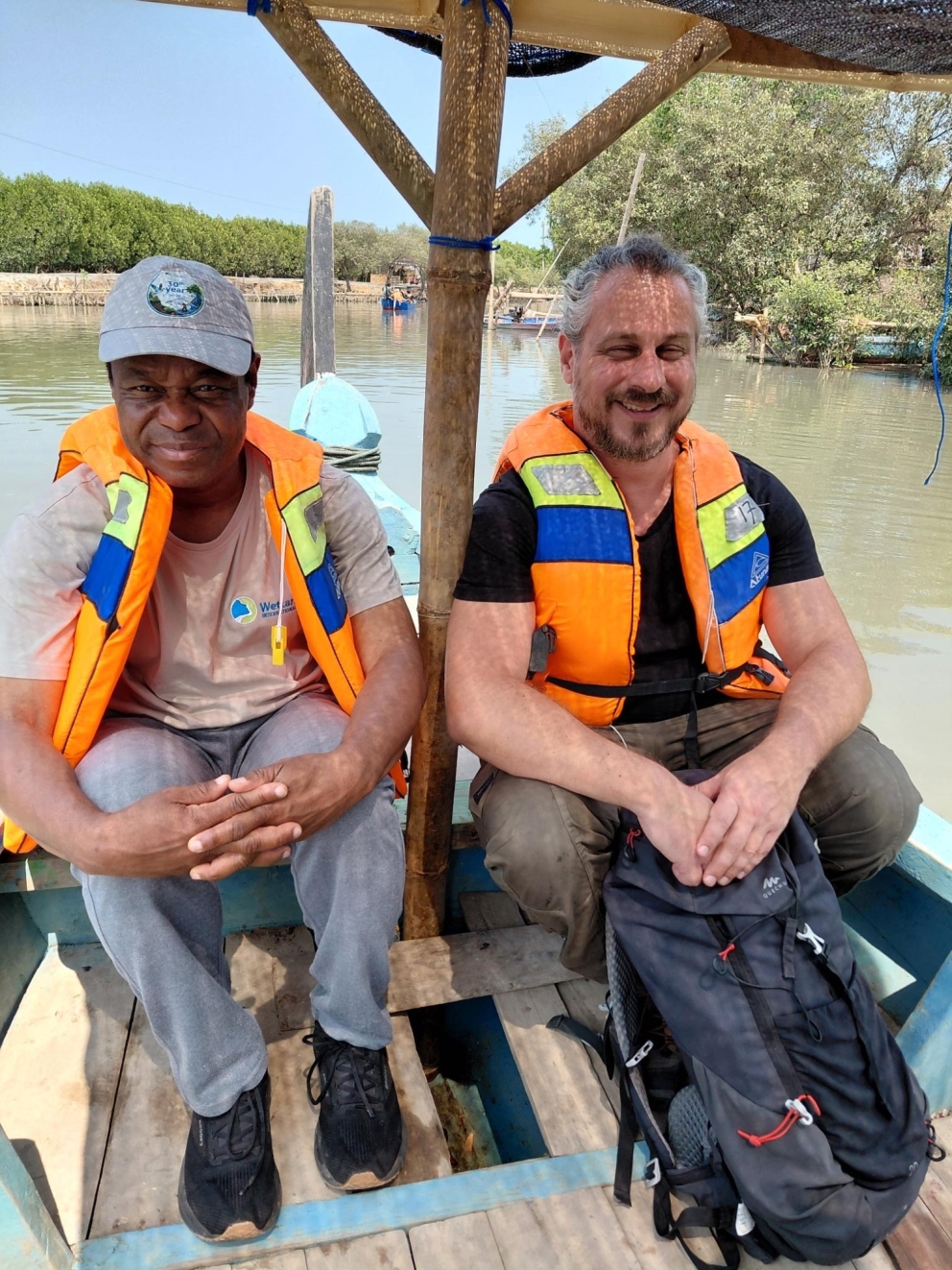
I’m writing this piece on the road between Jakarta and Bangkok. I had just been there for a week together with colleague Lotte Jeursen, traveling with an international group of NGO leaders. In search of breakthroughs in protecting nature.
After 8 years of S&L, having guided more than 150 organizations, I sometimes think I can do it all. That I’ve seen it all. And perhaps in Belgium that was indeed the case.
S&L is internationalizing. Not because we’re bored in Belgium and the Netherlands, but because it is the mission of the organization and its consultants to catalyze major positive societal changes in this lifetime in the areas of climate, biodiversity, justice and (also economic) democracy. And peace. Hopefully that too.
Internationalizing
Belgium=>Netherlands check. But more and more international NGOs are also asking us for help. As white, Western organizational consultants with a shitload of bias and privilege, flying to the other side of the world to facilitate what is usually a majority of people from the Global South. Not straightforward. We also advise: find a local facilitator, there are plenty of good ones to be found.
And yet we found ourselves on the other side of the planet. The wonderful feedback we received: you do something we have never experienced before.
The result: Breakthrough.
But what do we do differently? Apparently something. Every major city on earth has people who have mastered the art of facilitation. But apparently not the S&L way?
What we do differently.
Difference 1: Always Deep Dive
Deep diving means getting to know the organization better by reviewing a great many of the organization’s documents and having focused conversations with employees, one on one. Even before you begin a process.
In the beginning, we didn’t do that. Very tough, as a consultant: starting at your flipchart without prior knowledge Of course, you’re supposedly “brilliant” and have figured everything out after half an hour of facilitation. Not.
Of course. The dynamics. What’s going on. Patterns in organizations do become recognizable after a while. And as a facilitator, that will get you quite far.
But is it quite far in the right direction? In a deep dive, you really get to know an organization well and discover the actual need. And that is often completely different from “the question”.
“In a deep dive, you really get to know an organization and discover the actual need. And that is often completely different from ‘the request’.”
The lesson is surely that it is better to be very well prepared and to properly understand the underlying issues and needs of the organization. Keeping the right goal in mind. Yes, deep diving does of course cost more. But it saves the organization a great deal of time and money during the next steps of the process.
Different 2: Facilitating and advising at the same time
Facilitating is an art. An art we train for at S&L. Drawing the wisdom out of a group within the organization. That is called working Inside-Out. Working systemically. Being creative with methodology. About half of “consultants” swear by it.
The other half, in turn, swear by working Outside-In. As a consultant, you have already seen a lot. You are wise. You have a lot of knowledge. And the organization you work for asks you “what to do”.
It is often seen as sacrilege to mix the discipline of process facilitation and advice. And yet that is very often what we do with S&L. And that is unique. But it is also a little complex, wearing those 2 hats.
Different 3: (Re)designing the process together with the organization
You see many governments do it (we don’t work for them), but more and more organizations are doing it too: drawing up a detailed TOR that you, as a consultancy, can then bid on: read docs, 8 interviews, 3 sessions and a report.
No, thank you. That’s not going to work. It’s like that couple who have drawn their dream house in Google Sketch Up and present it to the architect as a “this is how it has to be.” The result is always: mediocrity. Or worse: a house without stairs.
At S&L, whether there is a TOR or not, we always first talk to the organization. At least twice. That way, we build the process together.
And then there is the Snozzi rule: Make a plan. Carry it out. And if, along the way, you find that you need to adjust. Then always adjust. You can be sure of it. In international groups, you constantly have to adjust.
Different 4: Bringing strategy to life with decisions, actions and checks
Strategy without actions, indicators and decisions is simply a dream that no one remembers. When co-designing a strategic process, we at S&L therefore always insist on going beyond the abstract parts of a strategy: vision, mission, Theory of Change.
“Strategy without actions, indicators and decisions is just a dream that no one remembers.”
No strategy is complete if you have not also looked at your own operational setup. At your money, for example, your systems, your partners, the competencies in your team.
And a multi-year strategy can read fantastically. Until you translate it into actions and to-dos for “next year +1”. Stress, because now it becomes concrete. And at least one person will have to do something differently than yesterday. Not infrequently, that abstract strategy changes to a level that is understandable and often also a bit more achievable. Distant dreams then become targets close at hand.
“Distant dreams then become targets close by”
Servant leadership
Supporting international NGOs is much harder than helping a national organization. The right attitude for an organizational consultant is one of servitude and leadership at the same time.
Servitude. Constantly exploring what the need in a group is and adapting your process and agenda accordingly. But also simple things such as direct reporting: sending the report on the same day as the session (and the to-dos 😊 ). And sometimes also taking over where the organization itself does not succeed.
But it is also leadership. Drawing well-founded boundaries. It is influencing others so that they do what is needed. It is taking responsibility for what is going well and, above all, for where it is not. It is bringing calm, but also challenging people to get even more out of it. It is protecting your group and, in some cases, even sacrificing yourself.
Servant leadership.
Honestly
But also, honestly. Supporting international groups is also wonderful. It is making an impact on a large scale. It is seeing the world. Continuing to be amazed by the differences and the similarities. By the beauty, but also feeling sadness when seeing the tangible effects of climate change.
It is sometimes also muddling through. Sometimes it is excelling.
And above all, it is a lot of bowing. Bowing to the fantastic work that people, paid and unpaid, do all over the world. Tens of thousands of kilometers apart and yet connected around one mission.
“Tens of thousands of kilometers apart and yet connected around one mission. Lotte and I take our hats off to that.”