
For many organizations, the end of 2024 was the deadline for a new policy paper. All that thinking and writing temporarily faded into the background over the past few months, but now everyone is receiving an email with the first feedback from the subsidizing authority.
That’s a good wake-up call for anyone who thought they were done with it: the real work is actually only just beginning. For many organizations, implementing the policy paper is a greater challenge than writing it.
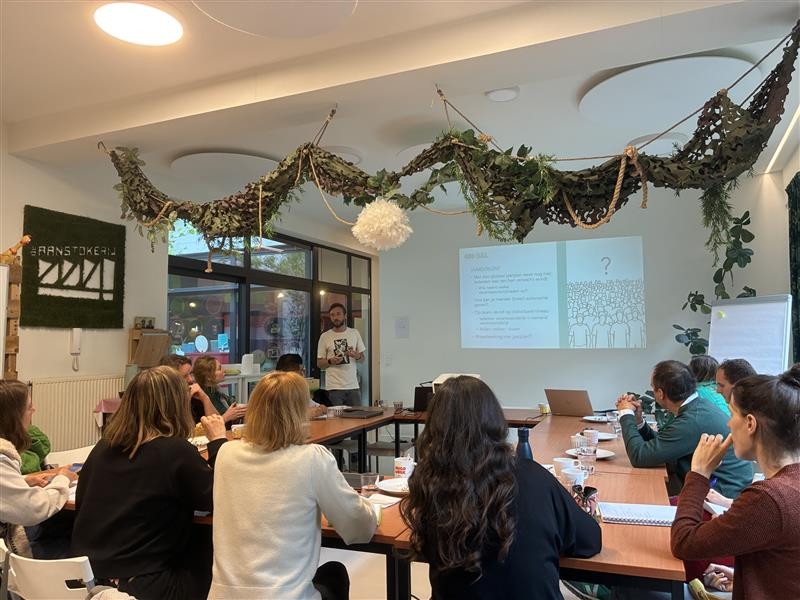
Over the past month, in two breakfast sessions on the operationalization of policy papers, we brought together more than 20 organizations that are in the midst of this translation process. From these conversations, several striking themes and inspiring practices emerged that we would like to share with you.
How do we get everyone on board?
Without a doubt, the most frequently mentioned challenge among the organizations we spoke to was: “How do we ensure that everyone within the organization knows, understands and supports the policy plan?”. Because if employees, volunteers and other stakeholders are not on board, the policy paper remains a paper exercise.
Ideally, writing the policy paper itself was a broad participatory exercise involving everyone who plays a role in its implementation. But don’t worry: nowhere does that succeed 100%. Even after the best process, there is still work to be done to get everyone on board.
So it is great to see inspiring examples of how organizations take on this task:
- Your policy paper follows formatting requirements imposed by the funding body. That is why organizations sometimes create an accessible version of their policy paper, without terms and concepts that are only understandable to those familiar with regulations and decrees. A summary in a visually appealing infographic or brochure, or a presentation with storytelling elements, are good examples of such a translation.
- Other organizations literally go through the organization with short presentations and interactive sessions per team or department. By making time for dialogue and questions, support grew. People felt seen and heard.
- Organizations sometimes also work with ‘policy ambassadors’ – colleagues from different departments who help think through the translation and actively help promote the plan. The policy plan (and all the questions that will come later about its implementation) is thus given a familiar face.
Whatever your approach is: the point is that a policy paper only comes to life when you manage to translate it into the world of everyone who contributes to it.
Exploring scenarios while awaiting clarity
As an organization, you are currently in a holding pattern. Your policy note has been submitted, you are now receiving initial feedback, but the official confirmation of the subsidy amount will only follow in September. This makes planning and implementation far from straightforward. Still, this does not have to be a reason to come to a standstill.
What you can do now is scenario thinking. Instead of waiting for certainty, you can prepare your organization for different pathways.
- Explore the status quo: perhaps you have aimed for an increased subsidy amount. But what if the amount remains the same? How much room will there be to realize your plans? Where will you need to set priorities?
- Critical scenario: do you already see signs of restraint or criticism in the draft opinion? Then it makes sense to also develop a scenario with decreasing subsidies. How would you limit the damage? Which choices become unavoidable?
By carrying out these thought exercises now, you will gain valuable time in the autumn and be ready with a strong narrative to potentially enter into discussions with the subsidizing authority.
“For many organizations, implementing the policy note is a greater challenge than writing it.”
Find your weakest link
The implementation and follow-up of your policy note requires a whole range of tools, tables and dashboards. You will have to collect and keep track of very diverse data for reporting, for internal monitoring and for following up on your goals and impact. New data flows may be added, and some may disappear. In any case, now is the time to start anticipating how you will be able to capture your organization’s operations in figures in the coming policy period:
- Registration of activities: can we consistently and correctly record what we do and whom we reach? Are results stored per project or per objective? Or is that exactly where the noise lies?
- Data quality: is data entered uniformly? Can you easily generate reports? Or is it a tangle of separate Excel files?
- Coherence between tools: do figures and insights from your day-to-day operations make their way into your policy monitoring? Or is it one-way traffic from top to bottom?
In this area too, it is important to keep in mind that there is no organization that can do this completely perfectly. No one has the time, expertise and resources for that. What you can do, however, is thoroughly analyze where your weakest link is, and work on that. There is no point in putting energy into a new CRM system or creating a complex dashboard if the weakest link in your chain is that staff members do not see the need to keep track of data. So take a careful and thorough look at where you can achieve the greatest efficiency gains before you invest time in designing new registration tools and processes.
“Involve the teams in translating it into concrete actions. This way, the plan remains realistic and has buy-in.”
The big to-do: creating annual plans
Perhaps the biggest concrete challenge that every organization now sees coming its way: translating the policy memorandum into concrete annual plans.
This means: defining objectives for each year, formulating actions, allocating resources, setting out timing, and assigning responsibilities. This exercise is crucial in order to be able to get started in January 2026. Your policy memorandum is a compass, not a detailed map that has already determined the entire journey.
What works well for many organizations:
- Work top-down and bottom-up: start from the policy objectives, but also involve the teams in translating them into concrete actions. This keeps the plan both realistic and supported.
- Choose realism: many organizations underestimate how much time and resources an action actually requires. And no matter how well your employees perform: everyone is ill sometimes or needs a less busy period now and then. So don’t fill up the entire plan, dare to make choices, and work with priorities.
- Integrate monitoring from the start: think now about how you will follow up on what is being achieved. Which indicators will you use? What registration is needed? This will make adjustments much easier later on.
Organizations that already have annual plans ready for internal consultation feel the calm this brings. It makes the translation into practice less abstract, and you gain insight into gaps or overlaps more quickly.
From planning to practice
The path from policy memorandum to implementation is not a straight line. It is a process of alignment, adjustment, motivation and structuring. But it is also an opportunity to grow as an organization, to create more cohesion, and to strengthen your social impact.
What we learned from the conversations: organizations that are already investing in involvement, scenarios, cyclical tools and clear annual plans are building a solid bridge between their vision on paper and their practice in the field.
So: take your memorandum in hand, open your calendar, and start that translation process. January 2026 may still seem far away, but those who plan today will work with confidence later.
Would you like to discuss this further? Or are you looking for tools to strengthen your annual planning, monitoring or registration? Let us know – we would be happy to think along with you.










