The title of this conversation is “Being perfect before you can do good?”. Sound familiar?
Veronica / Absolutely. We work for organizations that want to make a positive impact, and often they want their inner world to already look exactly the way they would like to see the outside world. And we share that ambition. But sometimes the bar is set so high that it becomes paralyzing. For clients as well as for ourselves. As if you first have to be perfect yourself before you are allowed to change anything positively in the world, but that never works. Both internally and externally, that goal is, of course, shifting all the time. A better world is not a static endpoint.
Where does that affect S&L itself?
Veronica / Internally, we have often spoken at length about how equally, diversely and democratically we want to work. To be a reflection of how you want the world to become. And we really did want that. Only: in practice, it turned out that we couldn’t live up to our ideals in every area. We were sometimes stricter with ourselves than necessary, and sometimes not strict enough. We created expectations, including among new colleagues, that we could not yet fulfill. And that gap brought tension and sometimes pain as well.
How do you then deal with that gap between ideal and reality?
Veronica / By naming it. Not making it seem better than it is, but not heavier than it is either. At the same time, we try to look at what we are already doing well today, but also where we fall short and what we can and cannot do about it. That honesty is difficult and liberating. Not only for us, but also for those who work with us. It creates space to learn, instead of continuing to hold on to a story that isn’t true. That sense of reality comes with grief, and with relief.
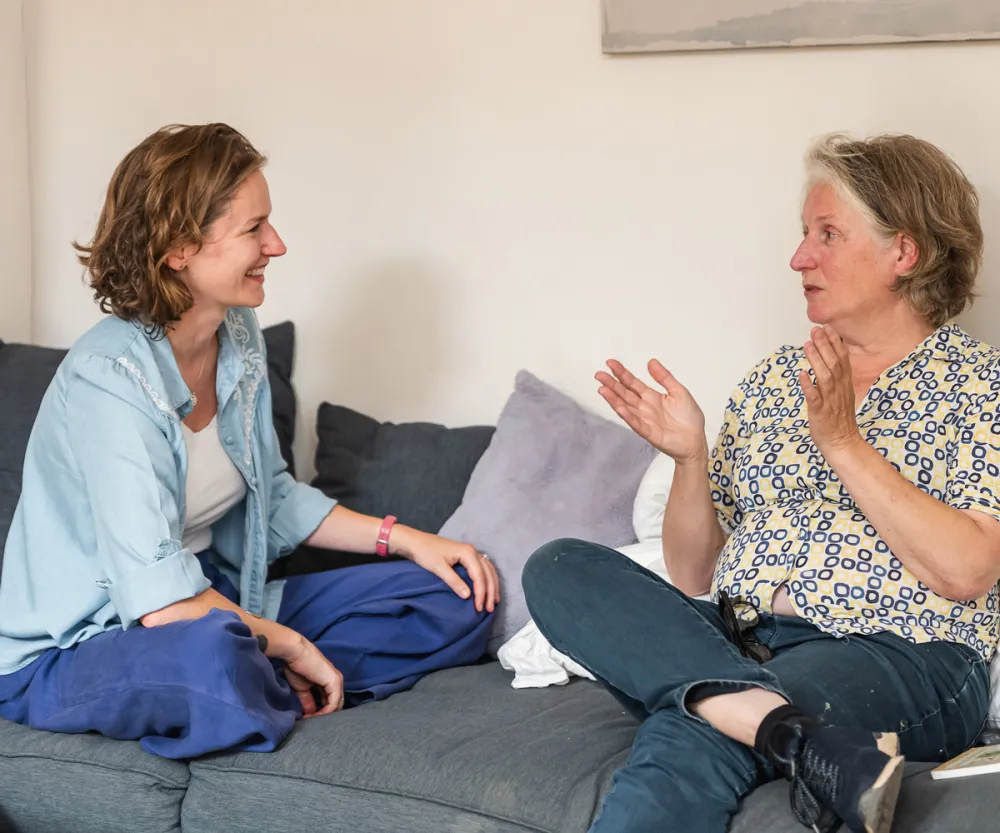
You say that people also left along the way.
Veronica / Yes. People we had recruited with a lot of promise and conviction. Good people. And that hurts, because their departure also says something about the limits of our model. Of course, we learned a lot from it. Now we are more realistic about what we can offer. Because if we say we want to be a genuine organization, that also includes honesty about what is not (yet) possible. And that honesty is more important than grand ideals.
Can you give a concrete example of where the ideal clashes with reality?
Veronica / Working with us if you are only available between 9 a.m. and 4 p.m., for example because of caregiving responsibilities, is not always feasible. And that stings, first and foremost for those who cannot make it work, but also for us. We would prefer everyone here to have workable work, but our reality is that some projects require flexibility, including in the evenings. We cannot simply magic that away. We do try to experiment with solutions, such as more internal meetings during working hours, but there are limits to that.
“That is simply a difficult balance: being satisfied with what is already there, without becoming complacent. Allowing yourself to be on the way.”
Do you also see that tension among the organizations you work with?
Veronica / Certainly. As a non-profit organization, you may want to truly value your people financially for the work they have done, and to pay competitively with the for-profit sector, but come up against limited resources. Those limited resources determine how high you can set the bar. That is not a lack of ideals; that is reality. The danger is that organizations get stuck on this, because they cannot fully live up to their values, and in doing so miss the opportunity to make a positive impact in the outside world.
How do you safeguard that balance between ambition and realism?
Veronica / For me, it is about leadership. You do not have to be perfect to do good. You have to be honest. About your limits, your resources, your mistakes. And at the same time, you remain ambitious. That is simply a difficult balance: being satisfied with what is already there, without becoming complacent. Allowing yourself to be on the journey.
That sounds simple, but it also takes courage.
Veronica / Yes. Honesty is sometimes uncomfortable. Especially in a context where people are highly engaged and have a finely tuned moral compass. But the alternative is harder: losing yourself in castles in the air, with an environment that also bears the consequences. We have learned to speak from where we truly stand today. Or rather: we are learning to do so. That does indeed take courage, but it also brings calm and direction.
What do you hope readers take away from this?
Veronica / That you do not have to wait until everything is right to do what is good. That imperfection is not the opposite of integrity. And that leadership, especially in turbulent times, above all means: daring to carry the complexity without losing hope.
We often discuss this theme with organizations in transition. Would you like to know how we deal with values, workability and growth? We are happy to share what we learn along the way.
Contact Veronica Demarest or Aurélie De Cock for a conversation.










