vzw Jongerenwerking Pieter Simenon
vzw Jongerenwerking Pieter Simenon works with young people and the people around them who face challenges across multiple areas of life. It also supports young people whose behaviour crosses boundaries or who come into contact with the youth justice system.
Everything it does is grounded in an approach that places the young person or victim, their immediate environment and wider society at the centre.
The question
Innovation and creativity are part of this organisation’s DNA. It saw important changes taking place across the sector and wanted to make the most of that momentum. Policy developments around early identification, prevention and support close to young people and their communities aligned closely with its convictions. It was the right moment to take a fresh look at its strategy.
We helped sharpen the impact of those strategic choices and plan their implementation. Which roles and functions would be needed? How should decisions be made and meetings organised? And how could teams across different locations work together in future? The assignment had three parts: a strategy, a renewed organisational model and a high-level action plan that the organisation could take forward itself.
The impact
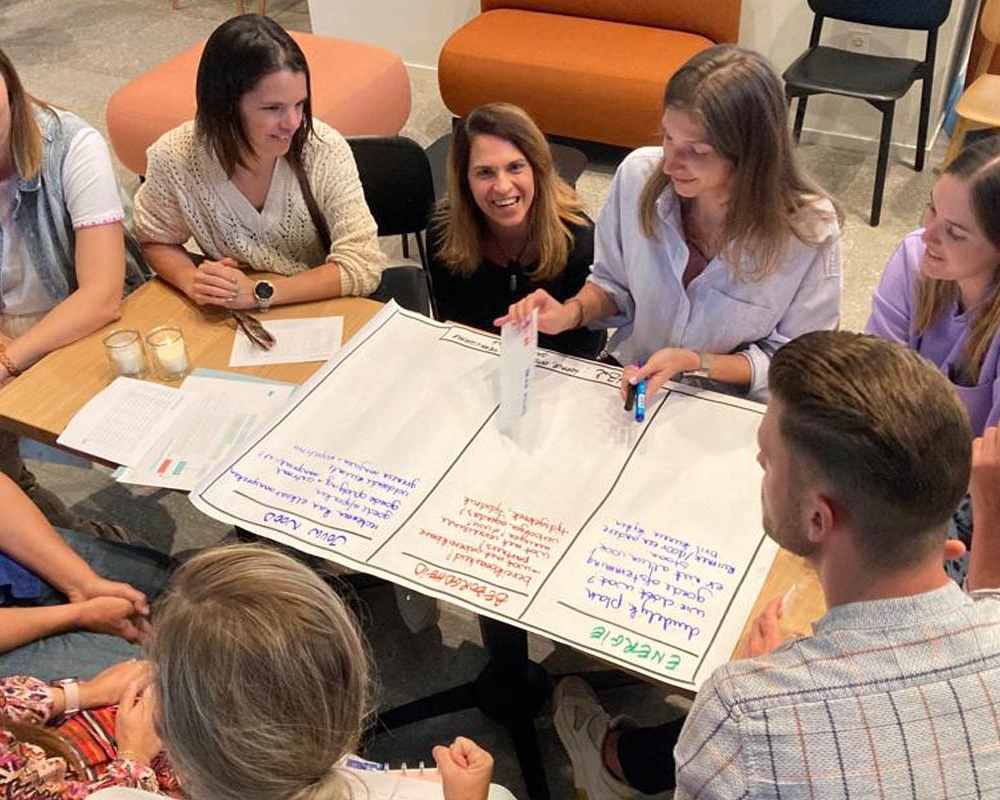
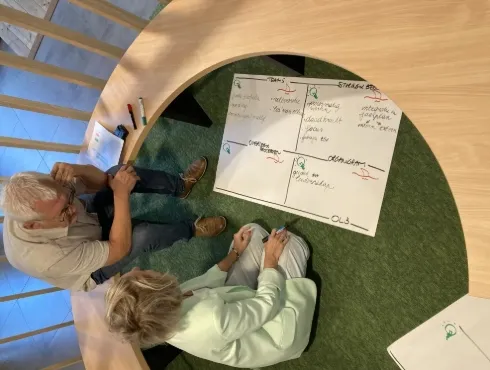
Bart De Bleser and Siska Van Houtte first asked Jongerenwerking Pieter Simenon to assemble a core group representing every part of the organisation. It included frontline practitioners, strategic thinkers, coordinators and representatives from the different regions—an especially important dimension for this organisation. The process followed a fairly classic strategic pathway, using S&L methods to sharpen the key questions: What makes your organisation unique? What lies at the heart of the challenge? We used several exploratory exercises and developed an impact model to guide its strategic development priorities.
An equally important second part of the process involved rethinking how collaboration and supporting structures could carry this renewed vision forward—and how to bring the whole organisation into the change process.
The challenge
What initially appeared to be the greatest challenge became a key ingredient in the project’s success. As mutual understanding grew, the barriers between different services and regions began to break down. Team members gained greater recognition for their contributions and roles. By weaving role-play into the process, we enabled them to explore and absorb the implications of the new strategy, understand one another’s perspectives and experience the shared way forward. For an organisation with a strongly participatory approach, this was essential.
Once the strategy was in place, we brought the whole team together for a dedicated connection session. This was a crucial step in helping everyone understand, support and remain engaged with the new direction.
The collaboration
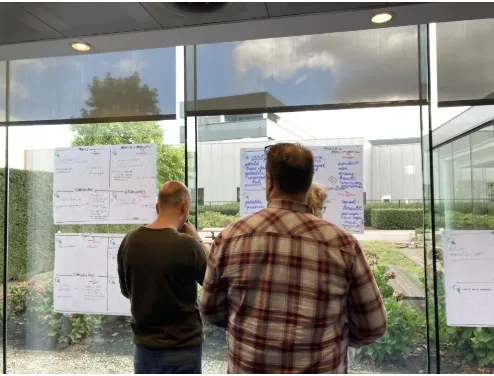
The core group became a genuine team of ambassadors for the strategy. It was difficult to imagine a better outcome. Their enthusiasm for connecting with and learning from one another was striking—and wonderful to witness. The core group continues to meet even though the strategic process has ended. This allows its members to stay connected, review progress together and coordinate quickly. They now have an action plan, shared energy and a strong team that can adjust course when needed while safeguarding the organisation’s principles.
Three tips from Roel Gerits and Ilse Jaspers (management team)
Acknowledge the challenges you face. Naming them together is the first step towards addressing them.
- A strong external profile depends on genuine internal connections.
- Start with the low-hanging fruit, then set your sights higher.
- We are still developing a shared language, but we are taking the ABC approach we learnt from Siska and Bart at S&L with us.
vzw Jongerenwerking Pieter Simenon had support of these team members
Does this case appeal to you?
We would be happy to discuss your organisation’s specific needs. Two of our consultants will meet with you to explore your request and develop an initial proposal. Based on your feedback and further co-creation, we will then prepare a final proposal.