
Yesterday I went swimming. In open water that was five degrees. The air temperature was barely higher. The evening before, I had messaged that I actually didn’t dare. My fellow swimmers responded resolutely – of course we’re going! Cold-water swimming is actually quite a lot like everyday life. Sometimes you don’t feel like doing something you know is good for you. Without others, you get nowhere. Sometimes you simply have to step forward.
Wading through that cold water, it really hurt. As if countless tiny needles were pricking my skin. My body definitely had an opinion about it. In fact, my body thought we were going to die. Technically speaking, that’s true if you stayed in too long, but within a minute that isn’t really an immediate concern. In fact, I felt very much alive when I was standing on the shore. And a quote by Howard Thurman came to mind:
“Don’t ask what the world needs. Ask what makes you come alive. Because what the world needs is people who have come alive.”
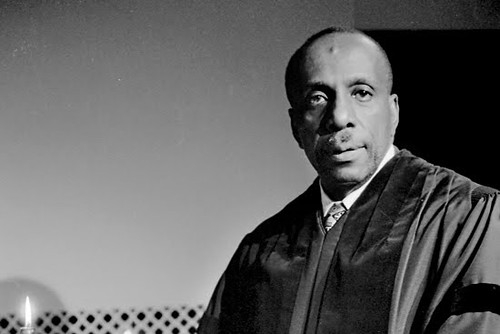
Thurman was a Black preacher, writer, and poet in America at the beginning of the last century. As a young teacher, he traveled to India, where he met Gandhi. They talked about the civil rights movement in America and about the role nonviolent resistance could play in equal rights for all citizens. As an adviser to Martin Luther King, Jesse Jackson, and Marian Wright Edelman, he played a major role in ending segregation in America.
His call—do what makes you come alive—is therefore not some wellness-related, luxury thing about feeling good in your own skin, but rather about stepping forward and doing what is needed, from your unique being. That may sound clichéd or banal—“just follow your passion.” Passion is pretty much the most overused word in Dutch marketing—just read some company slogans: “passion for concrete” “passion for pellets” “passion for youth and family.”
Thurman’s point is not that it is merely nice to feel alive, but that it is necessary in order to set the world in motion. As a teacher, he often took the time to question his students about what drove them most deeply: who do you truly want to become? When we come alive, when we switch on, we radiate an energy that is contagious. That is what the world needs.
Sometimes it only has to be something very small that makes you come alive and that can have a major impact, as Howard Thurman’s life story shows: as a 14-year-old boy, he stood at the train station to go and board near his secondary school—because children of color were not allowed to attend the secondary school in his neighborhood. He had exactly enough money for a ticket, but it turned out he had to pay extra for his suitcase. In tears, he saw his dream come to an early end on that platform, until a passerby asked why he was crying and gave him the missing money. That stranger, in his eyes, had permanently changed the course of his life. Thurman therefore dedicated his autobiography to the man on the platform who “restored his broken dreams.”
It is about discovering what motivates you most deeply, what dream lives within you. And because passion immediately sounds so grand and possibly intimidating, curiosity is allowed too. What makes you tick?
In personal development, you can use the model of Ikigai for this, which is translated as the reason you get out of bed in the morning. That already sounds a little less intimidating than an all-encompassing passion—after all, every day is a new chance to get out of bed for something.
In four areas, you ask yourself:
🩷 what you love
🩵what you are good at
💚what the world needs and
🩶what you can be paid for
Because it is sometimes difficult to put your finger exactly on what you are good at, we can explore those questions together by circling around them—what is a compliment you often receive from people? When do you experience flow, when do things move effortlessly? The overlap of the circles provides interesting information: if you are good at something and are paid for it, it can feel empty, because it is not what the world needs or what you love. Or the opposite: if you do what you love and what the world needs, you may still not have bread on the table. In this way, we peel back which activities from those four areas overlap: exactly at the intersection of all four lies your Ikigai, the unique thing that makes you come alive and that you have to offer the world.

In our strategic guidance of organizations, we use similar questions to search for the Big Hairy Audacious Goal. Which also sounds a bit like my feet feeling nice and warm after that cold-water swimming. Because that is what it does, such a BHAG or Ikigai—it brings you or your feet to life and shows you where you can make a difference, however big or small, by stepping forward.










