Tumult

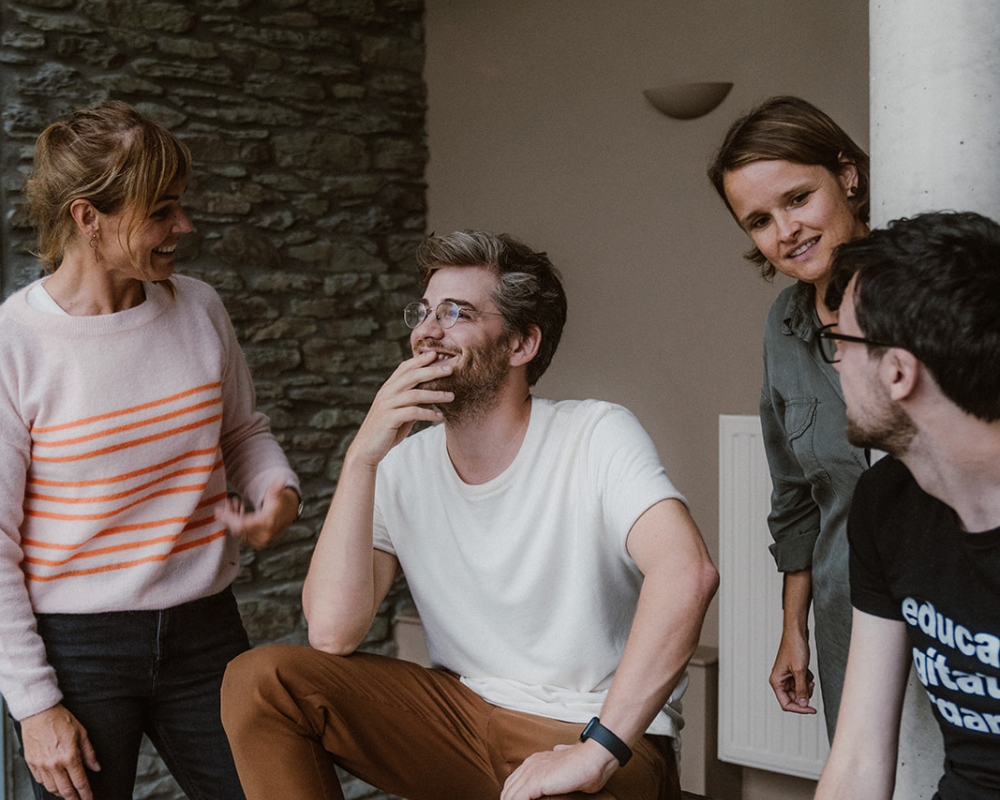
When a volunteer team falls out of balance, the organisation as a whole comes under pressure. Tumult chose not to panic, but to understand what was happening and make deliberate adjustments. Together, we looked at who joins, who leaves and what different groups of volunteers need. This led to clearer volunteer profiles, more targeted recruitment and a proposal for a more flexible system of volunteer allowances. The result is a team with greater clarity about what needs to be done, why it matters and who is best placed to do it.
Tumult is a youth-work organisation committed to preventing the exclusion of children and young people. It organises camps, training courses, immersion trips and other activities for children and young people facing social disadvantage. It also provides training and support for people working with children and young people in leisure settings. Tumult has particular expertise in working with young people from refugee backgrounds, but does not want to be seen solely as an organisation for newcomers. Its central purpose remains the same: bringing young people together and strengthening their capacity to live well together.
Although Tumult had built a strong volunteer team over the years, the team had become less resilient in practice. Many participants progressed into activity-leader roles, but there were too few volunteers with a traditional youth-work background or experience in a youth movement. In recent summers, too much responsibility had fallen on too few shoulders. That imbalance was beginning to erode what made Tumult’s volunteer model strong.
Tumult therefore came to S&L with a clear question: How can we rebalance our volunteer team and rebuild our capacity?
From isolated symptoms to a coherent strategy
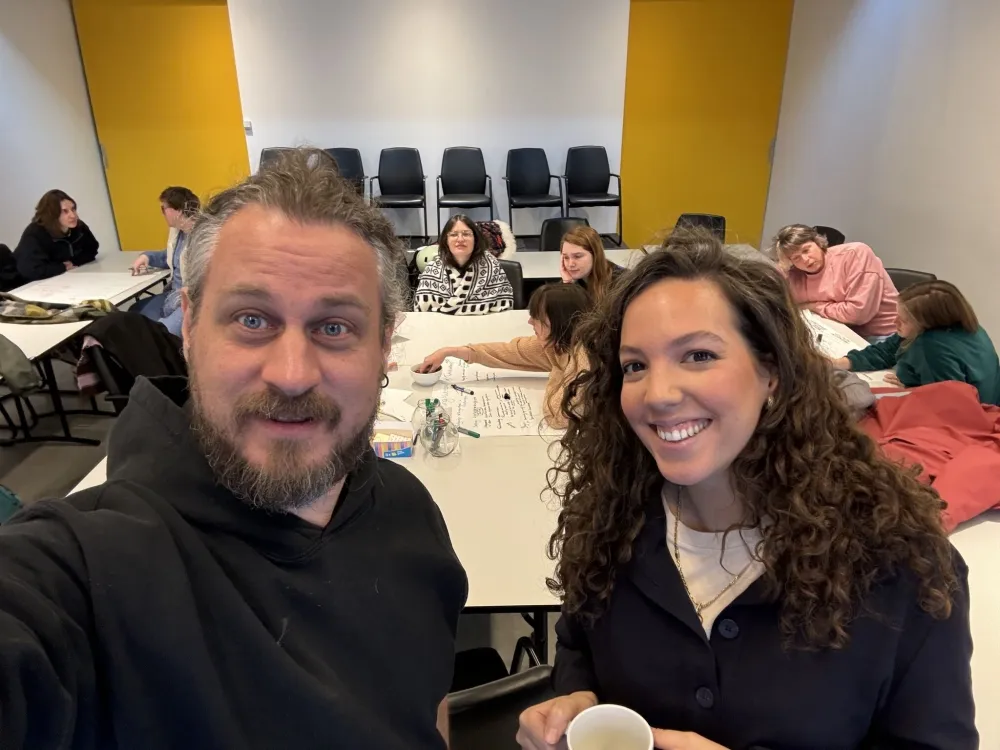
Together, we examined every part of Tumult’s volunteer strategy: its vision, recruitment, welcoming and induction, ongoing support, evaluation and the way volunteers leave the organisation. Across six working sessions, we turned these elements into a clear and practical framework. Recruitment was a major focus, although a robust volunteer strategy can never simply be an answer to a recruitment challenge.
The sessions involved a deliberately broad and diverse core team. Alongside them, we held one-to-one conversations with volunteers. That proved to be a crucial step. While staff members may sometimes soften or qualify problems, volunteers often speak very directly about what is not working. They raised issues that might otherwise have remained below the surface: differences in motivation, unspoken expectations and tensions arising from different assumptions and perspectives.
That honesty sharpened our analysis and helped the group address subjects that had previously been difficult to discuss. Tumult was also conducting a student research project involving in-depth interviews with a broad cross-section of volunteers. This provided another valuable source of insight. Together, the conversations and research brought in voices we might otherwise not have heard.
“What struck me most was how directly volunteers described what was really happening. Staff members can sometimes soften or qualify a problem, whereas volunteers tend to say it as they see it. That helped us finally put a few important issues into words.
”
Three breakthroughs
There are certainly some general principles and established practices for developing a volunteer strategy, but every process must also be tailored to the organisation. At Tumult, three breakthroughs emerged that will help it strengthen its volunteer model on its own terms.
1. Clearer volunteer profiles
We made the diversity within the volunteer team explicit. Rather than using a single broad category such as ‘young people from migrant backgrounds’, we identified several distinct profiles, each with different circumstances and needs. Recognising those differences allows Tumult to recruit more purposefully, provide more appropriate support and restore balance within the team.
2. Communication rooted in motivation
Tumult’s recruitment had previously been almost entirely offer-led: join an activity, sign up, become a volunteer. The organisation is now placing the purpose behind its work at the heart of its communication. Volunteers get involved because they want to make a difference—not simply because a camp has vacancies. This shift makes it much clearer which messages are likely to resonate.
3. A fairer, self-selected system of volunteer allowances
The traditional system—in which lead volunteers or those with the greatest responsibility receive the highest allowance—did not reflect people’s actual circumstances. New volunteers often face the greatest financial barriers, rather than those already taking on leadership roles. Tumult is therefore considering a system that would allow volunteers to choose the allowance that best reflects their situation. This would give them greater agency and better reflect the diverse group on which the organisation depends.
From strategy to practical handbook
At S&L, we often conclude a process with a slide deck and a set of core recommendations. In this case, however, we deliberately chose to produce a comprehensive written document. Not a report destined to disappear into a drawer, but a practical handbook that Tumult can continue to use. For each part of the volunteer strategy, it sets out the underlying vision, the decisions made, everyone’s role and the internal levers and resources required. The accompanying action plan translates the strategy into concrete priorities for the coming year and guides communication, the volunteering offer, recruitment and ongoing support. Following our recommendation, one member of staff was also allocated dedicated time to support and coach volunteers, using the action plan as a guide.
A follow-up review is planned after six months. Together, Tumult and S&L will examine what is working, what needs to be adjusted and what has developed organically in the meantime. That is how the strategy remains alive and responsive.
““Alongside our volunteers, the S&L consultants were also willing to challenge us. They asked incisive questions and kept pushing when they saw that an issue needed more attention than we had initially expected. Jihad and Koenraad understand our sector and bring a wide range of relevant theories, methods and contacts. Most importantly, they are not afraid to challenge us—which was exactly what we needed.
”
Does this case appeal to you?
We would be happy to discuss your organisation’s specific needs. Two of our consultants will meet with you to explore your request and develop an initial proposal. Based on your feedback and further co-creation, we will then prepare a final proposal.