What does it mean to truly decolonize within the International Solidarity sector (formerly Development Cooperation)? That question was central to the research report that S&L recently wrote for the NGO Federation on the theme of “decentralization”, and in the conversation that David De Beukelaer had about it with Jeroen Van Hove.
About decentralization, power and the discomfort of change
Decentralizing operations in the context of decolonization requires more than introspection or symbolic steps. It begins with the realization that power must be shared — and therefore also with the ability of NGOs to let go of structures, control and assumptions. Without a shared vision of the future and a clear answer to the why question, decentralization processes remain unfocused and have little impact.
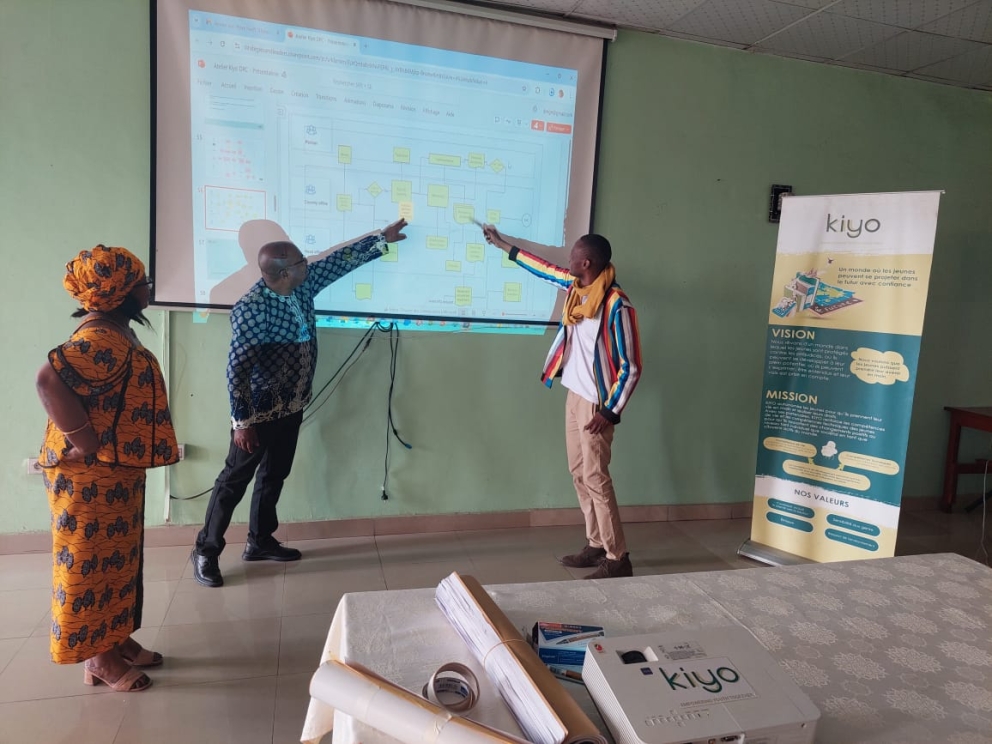
For the laypeople among us, first give me the basics: what is this report actually about?
Former development cooperation actually stems from the colonial story. When certain countries became independent, Belgium, among others, arrived there with money, charity, and knowledge. But a trend toward decolonization has been underway in that sector for years. For example, people no longer speak of the North-South axis or of development cooperation, and NGOs increasingly want to place responsibility with their partners in the countries themselves.
So there is a will to put an end to those colonial relationships, but … perhaps that is not so easy in practice?
It certainly does not happen automatically, and our research once again showed that ready-made answers or formulas will not offer a solution. For every organization it will be a search — although they can learn from one another — for how best to implement that ambition and what consequences decentralization precisely entails.
Decentralization?
Yes, that was the subject of our research report. Decentralization is the answer to the decolonization question. To decolonize the sector, we must decentralize. If you want to speak of equal partnerships between your local staff or partner countries and the headquarters, then not all responsibilities, people, and resources can remain in Belgium. So you have to decentralize. DGD’s (Directorate-General for Development Cooperation and Humanitarian Aid) question to us was to examine, at five Belgian NGOs that are active in Congo, how that decentralization is proceeding: substantively, strategically, and financially.
“It was important for us to gather all the different perspectives: those of the headquarters, the local partners, and the staff.”
That sounds like a fascinating but wide-ranging question. How did you set up such a broad study?
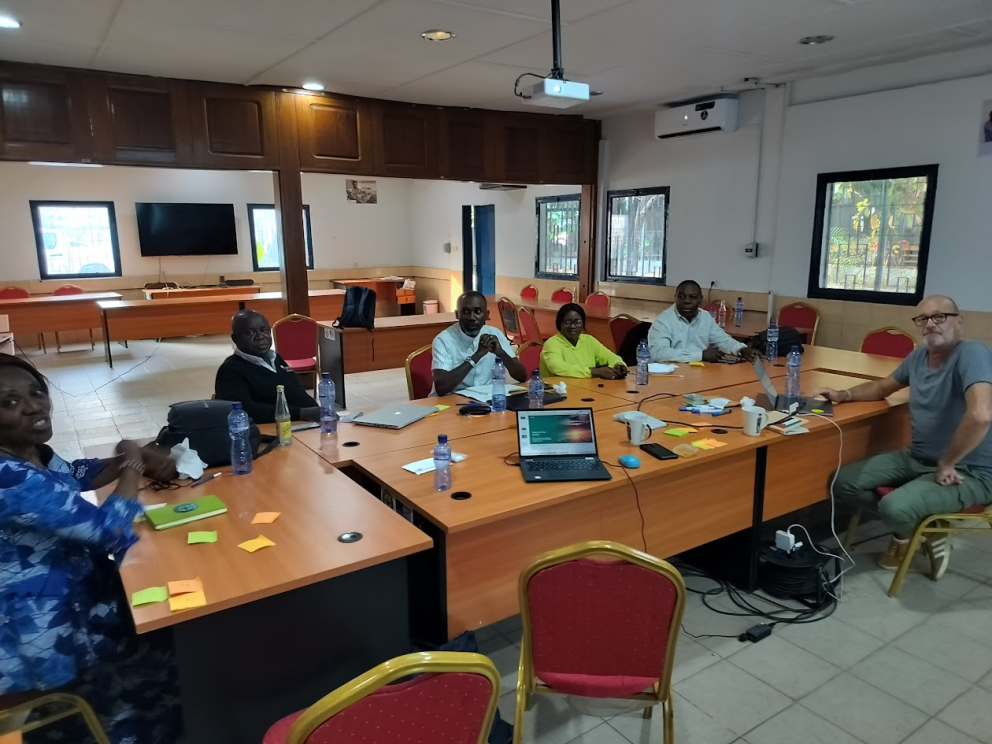
It is indeed. That is why we delivered a solid report with the necessary definitions, references, and attention to the question: ‘What is decentralization and how does it work in this specific context?’. There were many interviews, both here and in Congo. We did not want to simply lead the process as two white men; it was important to acknowledge our limitations and impact. Partly for that reason, we worked with a local anthropologist. We delved deeply into the figures, organized workshops and exercises, and brought together a great deal of knowledge. It was important to us to gather all the different perspectives: those of the headquarters, the local partners, and the staff. The differences and the similarities between their observations are telling.
And can you share some of the lessons that emerged from all that hard work?
Yes, but I really want to add the necessary nuance, because it was different for every organization. There is no one-size-fits-all solution. For example, the outcomes of the interviews were not really new to the local staff — it is their lived reality — but we did think it was important to underline the common denominator: yes, they want decentralization, more responsibility, and independence. But without the mistakes that were made during the decolonization of their country. And that is a smart parallel they draw. Simply letting go of your partners, without a plan or strategy, is not a sustainable idea.
That does indeed not sound very constructive. So how should they best approach that transition?
An organization needs to know where it wants to be in ten years in order to make well-founded decisions in two or five years. Otherwise, you are sailing blind. Do you want to move toward a situation of financial independence and decentralized power? Then you need to take a critical look at our Belgian audit culture, the control mechanisms that keep people dependent, and how you can adapt administrative requirements.
“Do you want to move towards a situation of financial independence and decentralized power? Then you need to take a critical look at our Belgian audit culture.”
As a Belgian NGO, aren’t you then also planning your own demise?
No, that’s too dramatic. As a head office in Belgium, you have to dare to make yourself redundant in certain areas within that time frame. That is what it ultimately comes down to. You don’t want to throw around politically correct words such as “decentralization” while in reality continuing to manage all the funding flows yourself and maintaining duplicate staffing to reread every report. Decentralization is about trust, and about the need to decolonize our own thinking as well. It is not about an intellectual judgment — as if the head office believes that the required level of expertise is lacking in the partner countries — but about the conviction that our way of reporting and monitoring is the only right way to manage projects and budgets properly.
How far are those five NGOs still from the decentralization you describe here?
DGD, the government, funds and sets the rules of the game. They always support partners through a Belgian entity, which then implements projects locally. That often places the partners in an implementing role. The center of gravity for decisions and strategy is still too often in Brussels, not in Congo. We often heard: “La main qui donne, est la main qui dirige”; of course, it is also about money, power, and awareness around this. But there are major differences between the organizations, and these become even greater when you look beyond our research. What Oxfam has done in recent years — setting up locally legally independent Oxfams that cooperate internationally — is truly an impressive step. Still, however good their model may be, it cannot simply be copied by other organizations because of their size or the nature of what they offer.
What do you think those organizations should do now?
To hand over responsibility, you have to build trust and be self-critical. That process is not linear, and realizing that is already worth a lot. In addition, you have to think about how to prepare people locally for those new responsibilities, for example through training or exchange, without forgetting that you cannot oblige them to stay forever. So: training and retention. One of the organizations in the report did this very well, by bringing partners together in regional meetings where they could learn from one another and exchange experiences. As a Belgian organization, you have to choose what role you want to take on in the future if the classic hierarchical model no longer works. Will you become a bridge-builder? Facilitator? Translator? Ecosystem builder? In a case study on Saint John in Malawi, we describe how that organization has become up to 60% financially independent from the Irish sister organization; the latter truly plays the role of bridge-builder, without standing above it hierarchically.

Which role seems most meaningful to you?
That depends on many factors, but I strongly believe in the need to bring people together and facilitate exchange. There is certainly a role there for traditional NGOs. The biggest question mark remains finances. DGD works with taxpayers’ money and therefore expects guarantees from Belgian NGOs that every cent is well spent. How do you relinquish that control? How do you work together as equals when one party holds the purse strings? Our research also showed that, for many local partners, the distinction between DGD and the NGO was not always clear when it came to financial decisions. That naturally also affects your relationship.
Yes, it has to. And who can actually determine what the best use is of every cent?
At the moment, funding mainly goes to projects. Strengthening the organization itself happens by doing. But what if your project ends? In the coming years, projects will also need to be funded that focus exclusively on making organizations more robust, so that they can work towards decentralization. If you really want an organization to become stronger, that requires a budget and support in that transition itself. So as a project in its own right, not gradually along the way. The sector needs investment in civil society (civil society); otherwise you keep organizations small and dependent on the project cycle. The five-year DGD programmes that will be written in the coming year are certainly an opportunity to build in more room for consultation and exchange with partners.
That does not seem to me an easy point to make, precisely because of that power relationship. Not for you, but certainly not for the local partners.
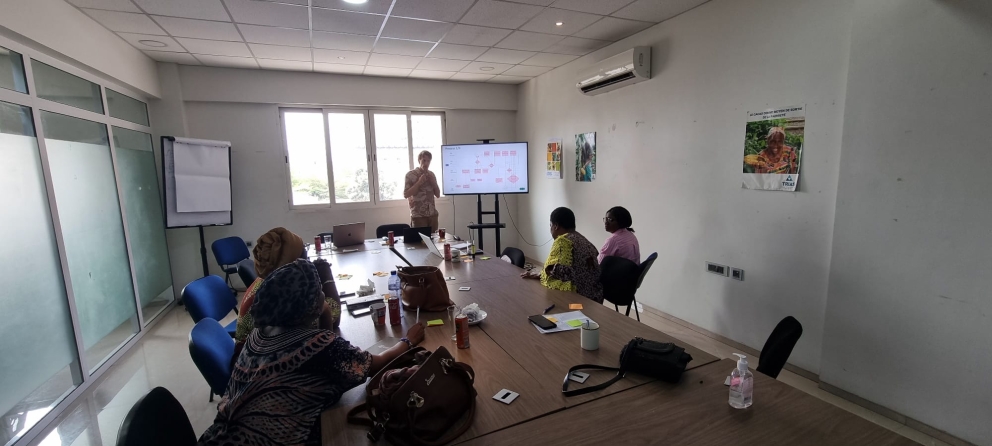
We worked together with Brigit, an anthropologist from Congo. By facilitating the workshops together with her, we were able to create a safe setting in which everyone could speak freely and put their opinions on the table unfiltered. Our methods worked well: working with different groups, holding separate conversations, using statements and introducing color codes. Partly because we were present as an independent party, we received honest input. And I am genuinely glad that we succeeded in doing that.
Would you like to add anything by way of conclusion to close?
For me, the report has an open ending. The question was rightly broad; our answer was partly applied and practical, but also generally strategic. That is not an easy gap to bridge. Even so, a number of things have come to the surface for me. That decentralization is a significant strategic issue, and therefore also requires a thorough strategy. And that begins with the question: where do you want to go, who are you, and which role fits with that? Then you map out the consequences of that: what does it mean for finances, the decision-making structure, personnel policy and the choices of projects to support. It is closely related to change management, and in that it is crucial for every organization not to start from the conviction that you already know everything, but to build a shared vision of the future together.
A combination of humility and ambition?
That does sound like a successful cocktail, indeed.










