Interim management | When a transition is under way
Change takes more than a plan. It needs someone to lead it.
A merger, growth, restructuring, a new funding model or a strategic pivot: the need is clear, and so is the direction. But who takes responsibility for the transition? Who ensures that the plan takes hold—in day-to-day practice, among your people and across the organisation?
S&L maintains momentum, bridges the gap between strategy and delivery, and ensures that the change takes root.
Does this sound familiar?
The strategic decision has been made, but no one owns its implementation. The merger has been announced, but roles, culture and decision-making remain unresolved. A new funding stream requires different processes, but no one has time to design them while keeping day-to-day operations running. Everyone is willing, but the transition risks becoming bogged down in additional meetings, confusion about roles and exhaustion.
Without someone to lead it, the transition will fail.
How we work
- The interim manager co-ordinates the transition from start to finish. We set priorities, establish a shared meeting structure and clarify the division of roles for everyone involved, including the board. We manage the pace: not so fast that support is lost, and not so slowly that momentum disappears.
- At the same time, we support leaders in dealing with uncertainty and resistance. Change affects people before it affects structures, so a project plan alone is not enough.
- After a few months, a widely supported core structure is in place. The new situation has begun to take shape, roles have been assigned and the organisation can move forward with greater focus rather than becoming bogged down in chaos or constant adjustments.
What will you gain?
- Capacity to manage the transition
Someone who maintains momentum, turns decisions into concrete action and takes responsibility. - Support and communication
A clear process, fewer rumours and greater ownership across the team. - A structure built around your needs
Roles, an organisation chart, meeting structures and decision-making arrangements suited to the new phase. - A bridge between strategy and delivery
Not simply a plan on paper, but the capacity to implement it in day-to-day practice.
What this looked like in practice
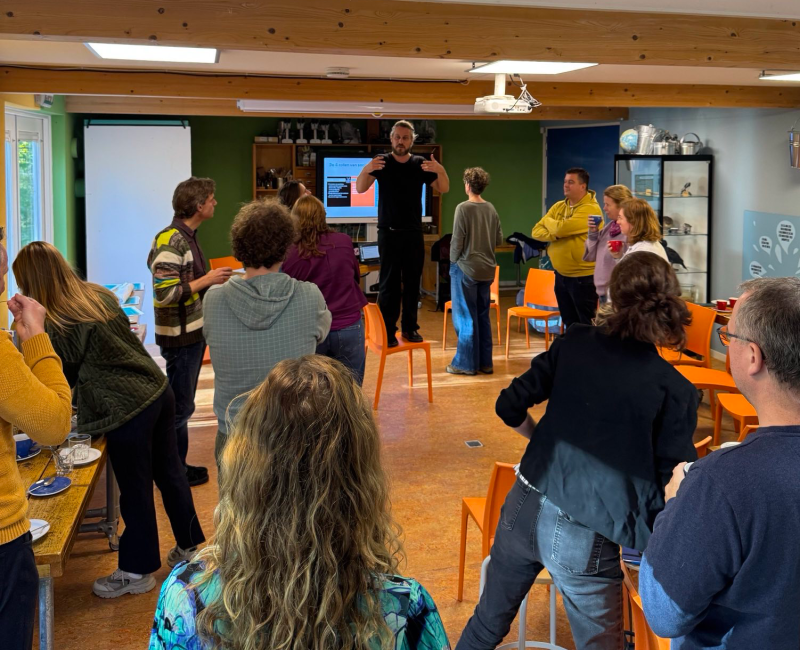
Two organisations merged around a shared mission, but they had different cultures, different approaches to decision-making and different expectations about roles and autonomy. Following the announcement, uncertainty grew: responsibilities overlapped, employees resisted the change and the board was unsure how to proceed. There was no neutral person able to oversee the transition as a whole.
Through interim management, S&L took responsibility for co-ordinating the transition. We set priorities, established a shared meeting structure and clarified the division of roles. At the same time, we supported leaders in dealing with uncertainty and the emotions arising within their teams.
After a few months, a widely supported core structure was in place. Roles were clearer, a new culture of collaboration had begun to develop, and the organisation could move forward with greater focus.
Want to know more or schedule a meeting? Have a question?
Don't hesitate and let us know.